Welcome to L.A. Street Names, the origin stories of street names across Los Angeles County, from the shortest cul-de-sacs to the longest boulevards. Mysteries solved, myths debunked, scandals exposed, history revealed. This is an ongoing project with more than 2,200 streets – and growing. See FAQ for more information.
Featured Major Street
Hollenbeck Avenue
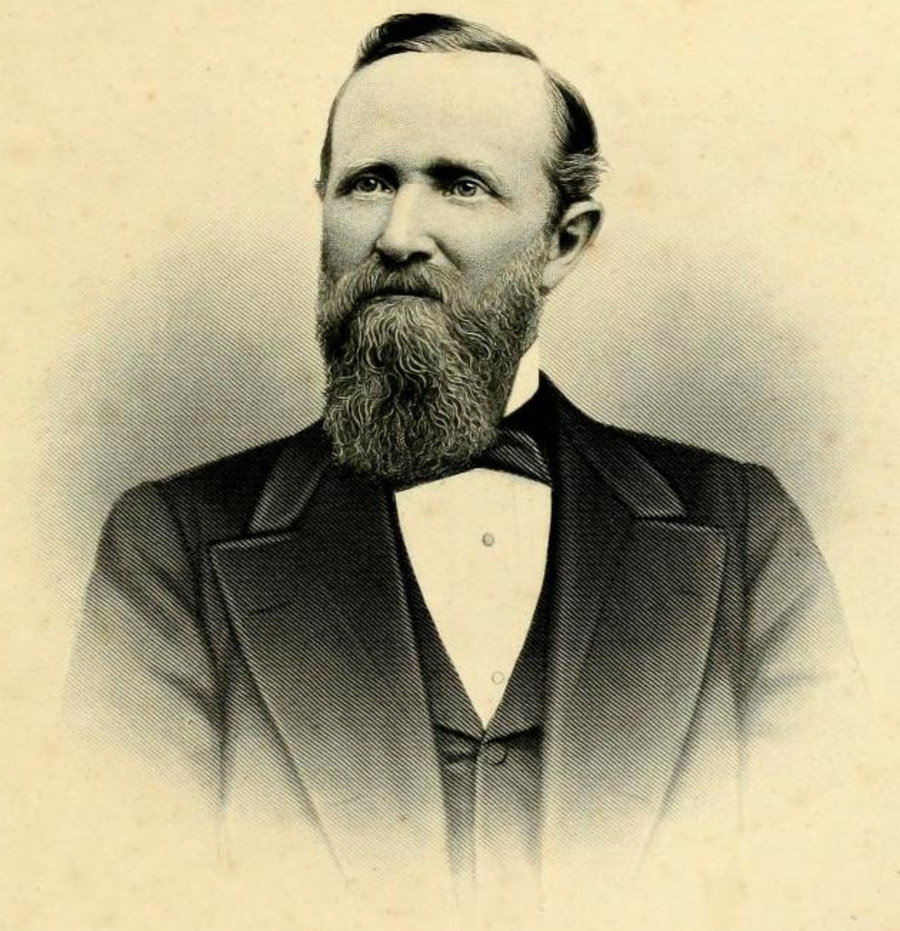
John Edward “Ed” Hollenbeck (1829-1885) was an Ohio boy who made his fortune in Central America. In the pre-Panama Canal era, people sailing from the East Coast to the West often crossed at Nicaragua, its huge lake expediting the journey. Hollenbeck himself was headed to San Francisco c. 1849 when illness forced him to disembark en route. He decided to stay in Greytown, Nicaragua and profited off his fellow migrants by running steamboat lines, a general store, and even a hotel, where he partnered with German expat Elizabeth Hatsfeldt (1827-1918). They soon became partners in marriage as well. After years of illnesses and political turmoil, the childless Hollenbecks decided to leave Nicaragua for Los Angeles. (Ed’s sister Susan was meanwhile headed here with her husband J.G. Bell.) They snapped up loads of property in 1874 and settled in Boyle Heights two years later. Ed’s money talked, and during his short time in L.A. he got into politics, banking, streetcars, hotels, and real estate, in particular the thousands of acres in the San Gabriel Valley that he took from the Badilla (a.k.a. Badillo) brothers and partly sold to J.S. Phillips, who founded Covina on the land. In the 1890s, Elizabeth Hollenbeck transformed their opulent Boyle Heights estate into a home for the elderly; it still exists as Hollenbeck Palms.